Hey there, Steve here 👋 — I’ve been fixing cars for over 20 years, and let me tell you something: wheel bearings are one of those parts most drivers never think about… until something goes really wrong.
You might hear a faint hum, feel a little vibration, or just think your tires are noisy — and before you know it, your car’s handling gets weird, your brakes start acting up, and that “harmless sound” becomes a real safety hazard 😬.
If you’ve been wondering about wheel bearing replacement symptoms, or you’ve noticed your car driving differently lately, this one’s for you. Let’s talk about what’s really going on beneath your wheels — and why catching it early can save you a ton of stress and money.
Alright, let’s start simple.
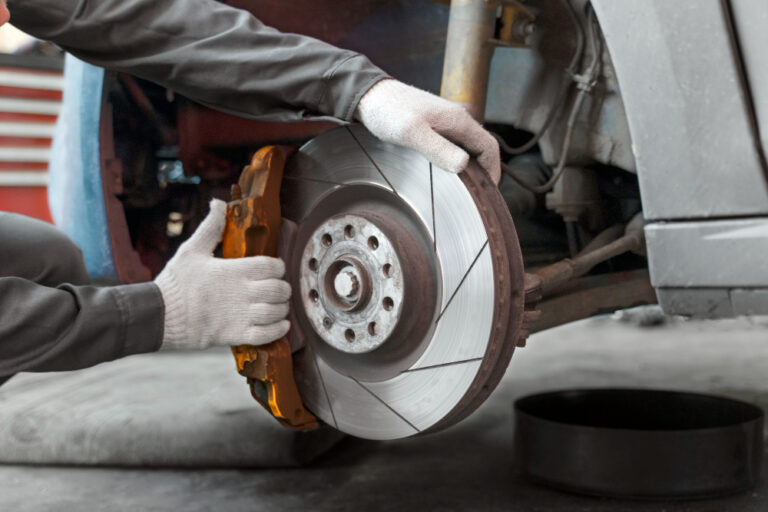
Your wheel bearings are small steel balls (or rollers) that sit inside a metal ring called a race, located in your wheel hub assembly. Their job? To let your wheels spin smoothly with minimal friction while supporting the weight of your vehicle.
When they’re in good shape, you don’t even think about them. But when they start to wear out, that smooth spin turns into grinding, humming, and eventually — trouble.
I like to tell customers: “Your wheel bearings are like the ankles of your car. You don’t see them, but if one gives out, you’re not going anywhere fast.” 🚗💨
A bad wheel bearing doesn’t just make noise — it can affect your steering, braking, and safety. Over time, that little grinding sound can lead to major damage.
Here’s the part most folks don’t realize: when a bearing fails, it can actually cause the wheel to come loose or even detach from the car. I’m not trying to scare you — but I’ve seen it happen.
A few years back, a customer came in after ignoring a loud humming noise for months. On his way to work, his front wheel locked up at 40 mph. Luckily, he was able to stop safely, but the damage? A new hub assembly, brakes, and rotor — plus a tow bill he wasn’t too happy about.
Moral of the story: wheel bearings are small, but the danger isn’t. Catching wheel bearing replacement symptoms early makes all the difference.
Here’s what to keep an ear (and eye) out for:
This is the most common sign. You’ll hear a low, humming noise that sounds a bit like driving on rough pavement — even when the road is smooth.
If it gets louder the faster you go or changes pitch when you turn, chances are it’s a wheel bearing.
⚙️ Steve’s tip: Try swerving gently (in a safe place). If the noise changes when you turn left or right, that’s a dead giveaway.
Ever feel like your steering isn’t quite as tight or responsive as usual? That could be your bearings. When they start wearing down, they create play in the wheel hub, which makes your steering feel sloppy.
I had a customer once describe it as “driving on a marshmallow.” 😅 It turned out both front bearings were shot, and once we replaced them, the car felt like new again.
Bad bearings can cause your tires to wear unevenly because the wheel doesn’t stay perfectly straight. You might also feel a vibration in the steering wheel, especially at higher speeds.
Sometimes, drivers mistake this for bad wheel balance or alignment. That’s why it’s important to have a pro take a look — we can tell the difference in about five minutes.
Modern cars have ABS (anti-lock brake system) sensors built into the hub assembly — right where the wheel bearing lives. When the bearing wears out or the hub wobbles, it can mess with the sensor.
That can trigger your ABS warning light or make your brakes pulse or grab strangely.
⚠️ Don’t ignore that light! It’s not always just an electrical issue — it could be your bearing crying for help.
If your car is lifted and you grab the tire with both hands (at 12 and 6 o’clock) and rock it — it shouldn’t move. If you feel a wobble or clicking, the bearing’s worn out.
A little bit of play means it’s on its way out. A lot of play means it’s unsafe to drive.
I always tell customers: “If your wheel wiggles like a loose tooth, it’s time to book a checkup.” 🧰
At Kingdom Autocare, when someone comes in with noise or vibration, we don’t just guess. We test-drive the car, use a mechanic’s stethoscope to listen near each wheel, and sometimes even use lift stands to isolate which one’s bad.
The goal is to confirm the exact issue — sometimes what sounds like a bearing is actually a tire or brake problem. But once we pinpoint it, we fix it right the first time.
Most wheel bearings last anywhere from 85,000 to 100,000 miles — sometimes longer if you drive mostly on smooth highways.
But if you deal with a lot of potholes, rough roads, or off-roading, they’ll wear faster. Moisture and road salt can also speed up corrosion inside the bearing.
🧩 Steve’s advice: When you rotate your tires (every 5,000–6,000 miles), have your mechanic give the bearings a quick check. Catching wear early can save you from a bigger job later.
Ignoring a bad wheel bearing can lead to:
I once had a guy come in after his front wheel literally snapped off the spindle. The bearing had completely disintegrated. His exact words: “Man, I thought it was just tire noise.”
Trust me, that’s not something you want to experience on the highway.
If you’re noticing any of the wheel bearing replacement symptoms above, it’s time to find a shop you can trust.
Here’s what to look for:
✅ Certified mechanics (like us at Kingdom Autocare 😉)
✅ Shops that use high-quality OEM or premium aftermarket parts
✅ Clear explanations and no surprise fees
✅ Warrantied work — bearings are safety components, they should last
A reliable shop won’t just replace the bearing — they’ll check your suspension, brakes, and tires too. Because sometimes, one problem causes another.
Wheel bearings don’t fail overnight. They start small — a faint hum, a light vibration, maybe a steering quirk. But give it time, and that “little noise” can turn into a safety issue that leaves you stranded.
If your car’s been sounding or feeling different lately, listen to that instinct. You know your car better than anyone else.
Bring it by Kingdom Autocare, and we’ll check it out before it becomes a bigger (and pricier) problem. We’ll inspect your wheels, bearings, and suspension so you can drive confidently again.
Don’t wait for the noise to get louder or the wheel to wobble more. Come see us at Kingdom Autocare — your trusted neighborhood mechanics.
Call today or book online for a full wheel inspection and professional wheel bearing replacement service.
Your safety’s worth it — and your car will thank you. 😉
— Steve