No one wants to think about worn-out tires—but if your tread is thinning, it’s time to act. Bald tires aren’t just ugly; they’re dangerous, especially when wet or during emergency stops. I’m a seasoned mechanic, and I’ve seen worn tread cause everything from flat tires to blown brings you to an awful halt… and an eye-watering repair bill.
Within a few minutes, you can check tread depth, diagnose uneven wear, and decide whether to rotate, realign, or replace. And if you’re curious about tire rotation and balance service cost, I’ve got a breakdown waiting for you too. Let’s get your wheels—and your wallet—in shape.
Tire tread provides traction, especially in rain, snow, or slick conditions. As tread wears away, your ability to grip the road drastically diminishes. That means:
Even if the bald patches seem small, wearing them down further creates a domino effect across all four tires—and can cost you much more than a quick rotation or inspection later.
Put a penny upside-down into the tread groove. If you can see the top of Lincoln’s head, the tread is under 2/32″—the legal minimum in many places, and definitely time to act.
A few bucks gets you a tool that shows precise depth. Measure in several spots on each tire to spot uneven wear.
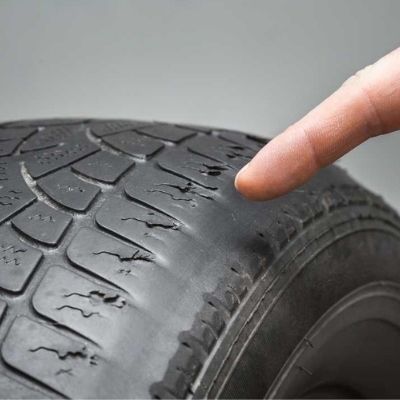
Watch for:
It’s not always just time driving around.
Over-inflated tires wear fast in the center; under-inflation wears the edges. Check your pressure monthly to avoid this common error.
Even a half-degree of misalignment can eat through outer tread quickly. I once replaced tires on a Subaru that were worn down to cords on the outside edge. A bent control arm was the culprit — an adjustment and reset later, and her tires lasted twice as long.
Bad suspension can let the tires bounce violently across the road, grinding tread away.
Frequent hard starts, tight cornering, potholes, curbs—these all tough on tread. One off-road customer wore out his all-terrain tires in less than 10,000 miles because of excessive curb-dashing… Ouch.
Not all wear requires replacement—yet.
Swapping tires front-to-back helps even out wear and extends tread life. It’s smart to rotate every 5,000–7,000 miles—or with every oil change. This preventative TLC keeps tread even and boosts longevity.
If one edge is wearing fast, you likely need an alignment. This optimizes tire contact and prevents early, uneven wear.
You’ll want new tires if:
When replacing, consider quality, tread rating, and whether you need all-season, performance, or rugged tires. And always balance your new set for smooth, vibration-free driving.
One of the first questions most drivers ask: How much will it cost?
Expect a range between $15–$45, depending on vehicle type and shop.
This is often paired with rotation because vibration can stem from unbalanced wheels. It usually costs $20–$60 per wheel, but many shops bundle it with rotation for savings.
A typical tire rotation and balance service cost at Kingdom Autocare is around $60–$120 for all four tires. It keeps your ride smooth, helps tread wear evenly, and avoids vibration-related damage.
When you get to replacement time, here’s what to consider:
It sounds like a lot, but that’s precisely what Kingdom Autocare helps you with—offering honest, no-pressure advice and installation.
If your tread is starting to thin, your ride’s feeling bumpy, or you’re wondering about tire rotation and balance service cost, bring your car to Kingdom Autocare. Here’s what you can expect:
📅 Book your tire check or tire service today at Kingdom Autocare—your tires will thank you later!
Worn tire tread isn’t something to put off. It affects stopping distance, handling, and your safety. The good news? A little care—like regular checks, rotations, and keeping an eye on balance—can stretch your tire life and save you money.
Concerned about tire rotation and balance service cost? We keep costs transparent, competitive, and worth every penny at Kingdom Autocare. Let’s get your tires in top shape today.
👇 Ready to book? Give us a call or schedule online now. Smooth, safe driving is just an appointment away!